Amid Concerns of Norovirus Cases, Olympic Leadership Insists There is No Outbreak
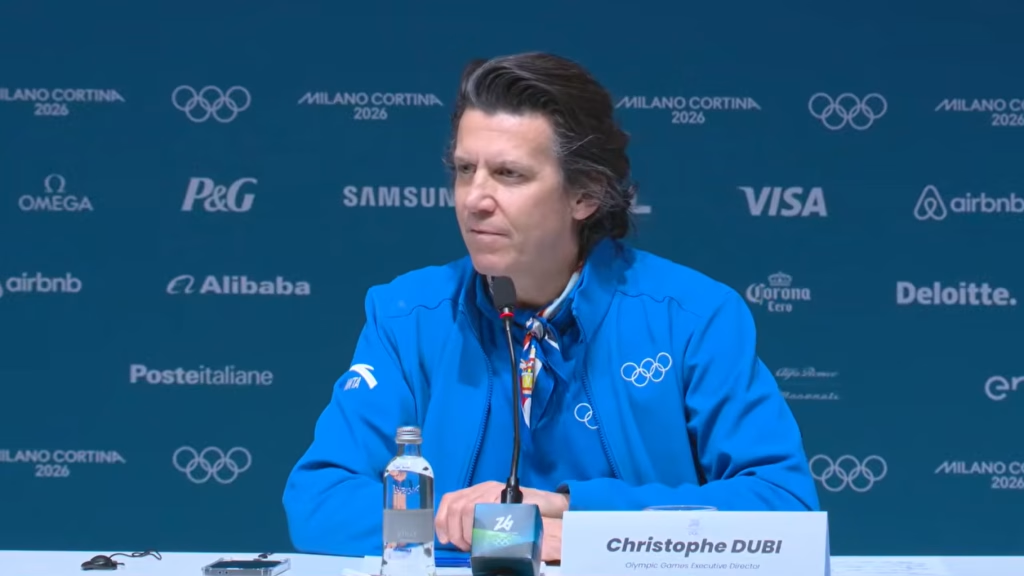
IOC Games Director Christophe Dubi speaks at a press conference during the Milano Cortina 2026 Winter Olympics. (Screenshot via YouTube/IOC Media)
Updated 2:13 PM
The worst possible situation for an Olympic athlete is to go to the Olympic games only to come down with an illness that keeps you from chasing your dream.
Such was the case for five women’s hockey players from Finland when they came down with the norovirus prior to their matchup against Canada. The game between the two hockey nations was delayed until February 12 due to the illnesses.
IOC Games Director Christophe Dubi indicated that standard measures are being taken to contain the norovirus cases.
“The response from the [medical] team in the village has been outstanding,” Dubi stated. “Very precise, very rapid, isolation providing all the conditions necessary for the athletes to recover and not to disseminate anything further.”
Dubi, who noted that all indicators were moving in the right direction, was also adamant that there was no norovirus outbreak at the Olympic village in Milan.
“We had a few cases coming from Finland, coming with symptoms, dealt with,” Dubi emphasized. “One case coming [from Switzerland] with symptoms, dealt with in the most appropriate way from the medical team in the village.”
IOC Spokesperson Mark Adams also indicated that the medical team wasn’t concerned about an outbreak in the Olympic village.
“I have a note saying that there is absolutely no reason to suspect these cases are related,” Adams said in the press conference.
Still, athletes are taking precautions in light of the stomach bug.
“The biggest thing was just being super-diligent in the common spaces in the village,” said Canadian Women’s Team Forward Blayre Turnbull on Saturday afternoon to TSN. “We’ve been washing our hands with soap and water like mad. More handwashing than I’ve ever done in my life for sure.”
The Olympic Winter Games that occurred in 2022 were held in a “closed loop” protocol due to the COVID-19 pandemic. This is not the case this time, so there are opportunities for cross-contact with shared equipment and facilities, even if athletes choose to wear masks and limit interactions with other national teams.
“In the dining hall specifically, there’s some items that are shared with all in the nations,” Turnbull said. “Normally, you take your tray and the staff there serve your food, but there’s condiments like salad dressings and stuff like that that are communal.”
Despite the limited number of cases, an IOC spokesperson indicated to Birds Nest Media that there has been a doubling down on athlete health since the COVID-19 pandemic impacted the Olympics.
“The experience of hosting Olympic Games in Tokyo and Beijing during the COVID-19 pandemic confirmed the effectiveness of basic public health measures in reducing the risk of spread of infectious diseases in general during any large gathering,” the spokesperson said in a written statement. “That has informed our planning for subsequent Games including Paris 2024 and Milano Cortina 2026.”